What Actually Protects Your Investment in Dubai and Abu Dhabi Real Estate
What actually protects a European buyer's capital in Dubai and Abu Dhabi real estate: escrow law, ADGM and DIFC courts, and where the growth numbers stand in 2026.
European buyers considering Dubai or Abu Dhabi tend to ask the same question, framed different ways: is my money actually protected here, or am I trusting a sales pitch? The honest answer isn't a vibe, it's a set of specific legal and institutional structures you can check for yourself. Here's what actually stands behind an off-plan or freehold purchase in the UAE, and where the market stands right now.
Escrow accounts: the mechanism that protects off-plan buyers
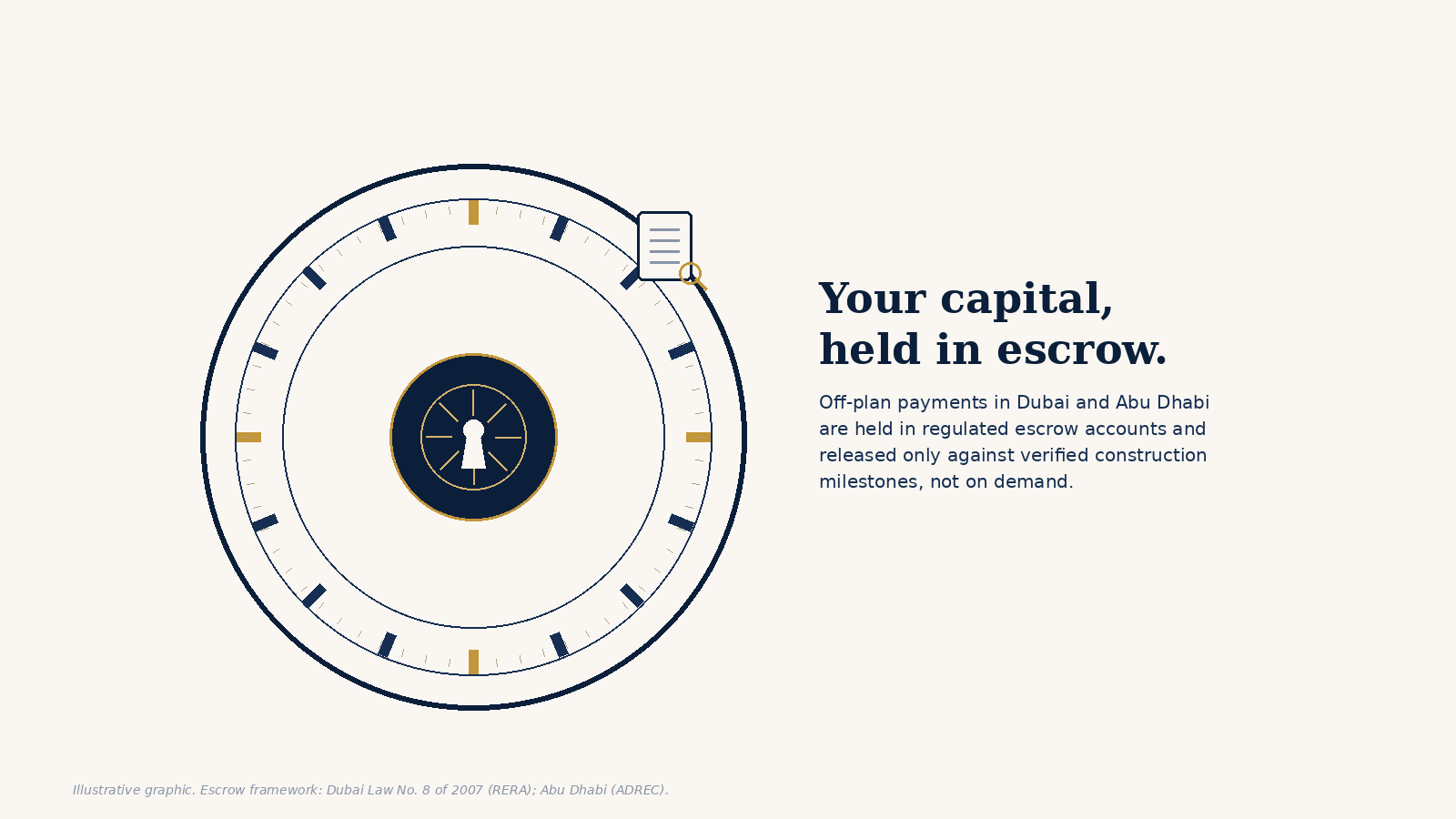
Dubai's Law No. 8 of 2007 requires every off-plan development to collect buyer payments into a project-specific escrow account, regulated by RERA (the Real Estate Regulatory Agency), rather than directly into the developer's operating account. Funds are released to the developer only against verified construction milestones, inspected and signed off before each release. A developer cannot access your payment simply because a sale closed; they have to build first. Abu Dhabi runs an equivalent structure through the Abu Dhabi Real Estate Centre (ADREC), with escrow accounts mandatory for registered off-plan projects and payments similarly tied to verified progress. This is the single biggest structural difference between buying off-plan in the UAE and buying off-plan in markets without escrow law: your capital is legally ring-fenced from the developer's general finances for as long as the building isn't finished.
ADGM and DIFC: independent common-law courts
Abu Dhabi Global Market (ADGM) and Dubai's DIFC operate as independent financial free zones with their own common-law legal systems, modelled directly on English law, with their own courts and judges, separate from the UAE's civil law courts. For a European buyer, this matters concretely: contract disputes, shareholder agreements, and many real estate structures can be written to fall under ADGM or DIFC jurisdiction, meaning they're adjudicated under a legal tradition and case law that will feel far more familiar and predictable than an unfamiliar civil law system, with judgments enforceable both locally and, increasingly, internationally through reciprocal enforcement arrangements. This is one of the more underappreciated reasons institutional and foreign capital treats Abu Dhabi and Dubai as credible long-term jurisdictions rather than purely opportunistic ones.
Where the growth numbers actually stand
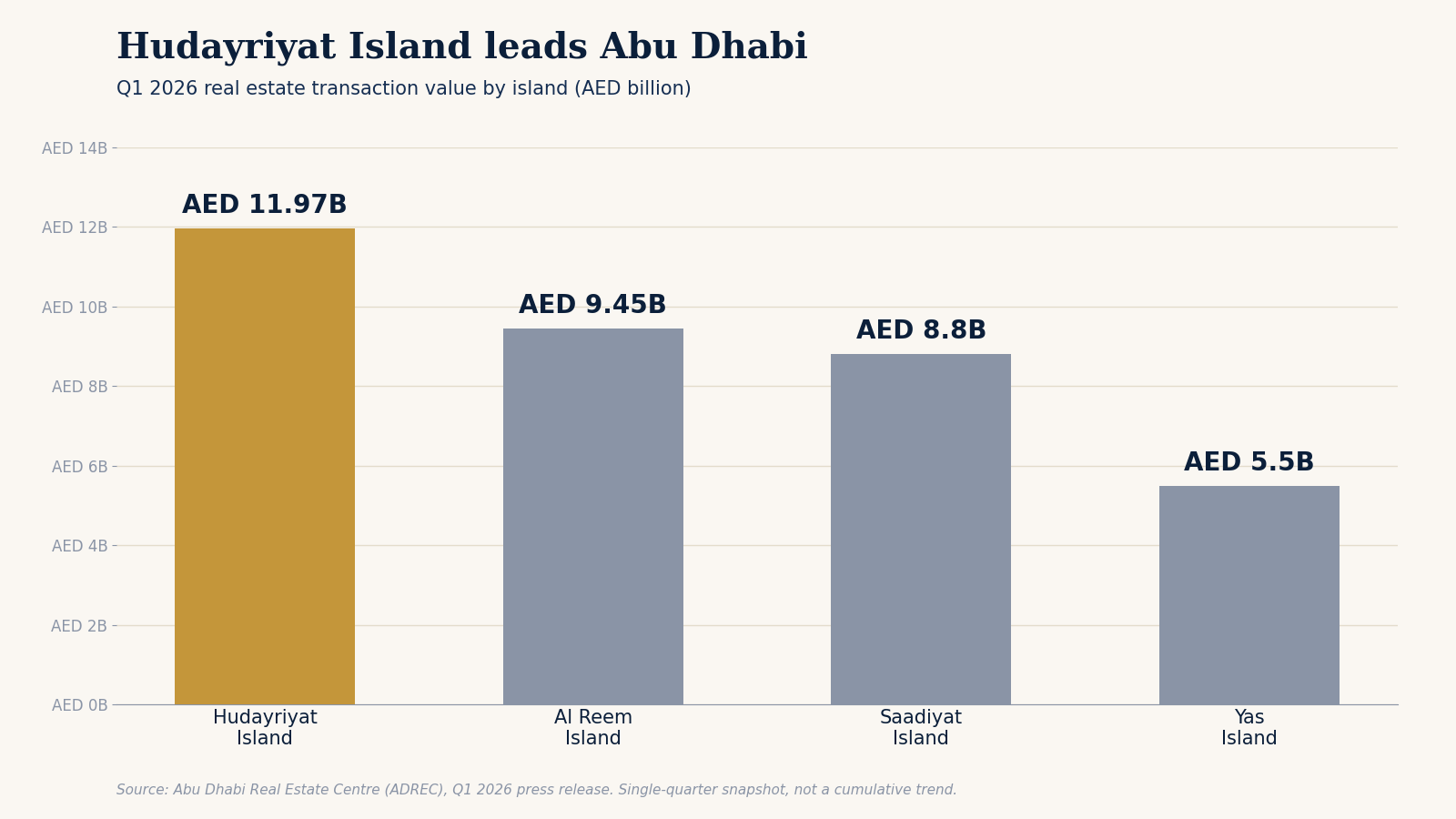
Abu Dhabi's real estate transactions reached AED 117 billion in the first half of 2026, up 112% year-on-year, according to figures reported by the Abu Dhabi Media Office citing ADREC data. Foreign direct investment into the emirate's property sector more than quadrupled to AED 13.8 billion in the same six months, already exceeding the full-year total for 2025, led by investors from the UK, China, Russia, the US, Germany, and France. A UAE property investment index published in June ranked the UAE as the world's leading real estate investment destination. ADREC also approved eight new investment zones in the first half of the year, bringing the total to 50 across the emirate, and has held rents flat on residential, commercial, and industrial properties in most zones to support market stability.
The safety numbers behind the headlines
On personal and civil safety specifically, the UAE topped Numbeo's global safety index for 2026, with Abu Dhabi and Dubai both ranking among the safest cities in the world on metrics like walking alone at night, burglary, and violent crime. Separately, the UAE has been the world's most-improved country on the Institute for Economics and Peace's Global Peace Index since 2021, climbing 31 places by 2024, driven substantially by expanding diplomatic and commercial ties across the region. These are independently tracked, third-party metrics, not marketing claims.
What this means in practice
None of this makes any individual purchase risk-free, and this isn't financial or legal advice, it's a map of the structures worth checking before you commit. Ask which escrow bank a developer uses and confirm it's a regulated UAE bank. Look at ADREC or DLD's own published transaction data rather than a single agency's marketing numbers. The regulatory and legal infrastructure behind Dubai and Abu Dhabi property has matured substantially over the past decade specifically to answer the questions European buyers ask, and it's worth actually verifying rather than taking on trust.
If you want a specific opportunity checked against this framework, get in touch for a private consultation.
Latest articles

| Privacy Policy & Terms